
Q.U.I.T
You probably already know what you need to quit.
It’s the thing that keeps coming up. The thing you keep explaining away. The thing you’ve thought about changing more times than you’d care to admit.
A job. A client. A habit. A relationship. A belief. A version of success. A version of yourself.
The problem is rarely knowing something needs to change. It’s knowing what to do with that feeling.
I know this because I spent years building a business I loved. It grew into a global agency, we worked with some of the biggest brands in the world and, eventually, there was a £24M offer on the table.
It was the thing I had been working towards. Then I realised I didn’t want it anymore. Which is quite an inconvenient thing to discover when everything is going well. I said yes first. Then I questioned it. I thought about what the next chapter would actually cost me, who I had become since starting the business and what I wanted my life to look like now.
Eventually, I said no. I quit. Not because the business had failed. Not because I had given up. I had changed, and the life I was building no longer fitted the life I wanted. Looking back, some of the biggest growth in my life has come from knowing what to stop.
So I created a way to think about quitting differently.
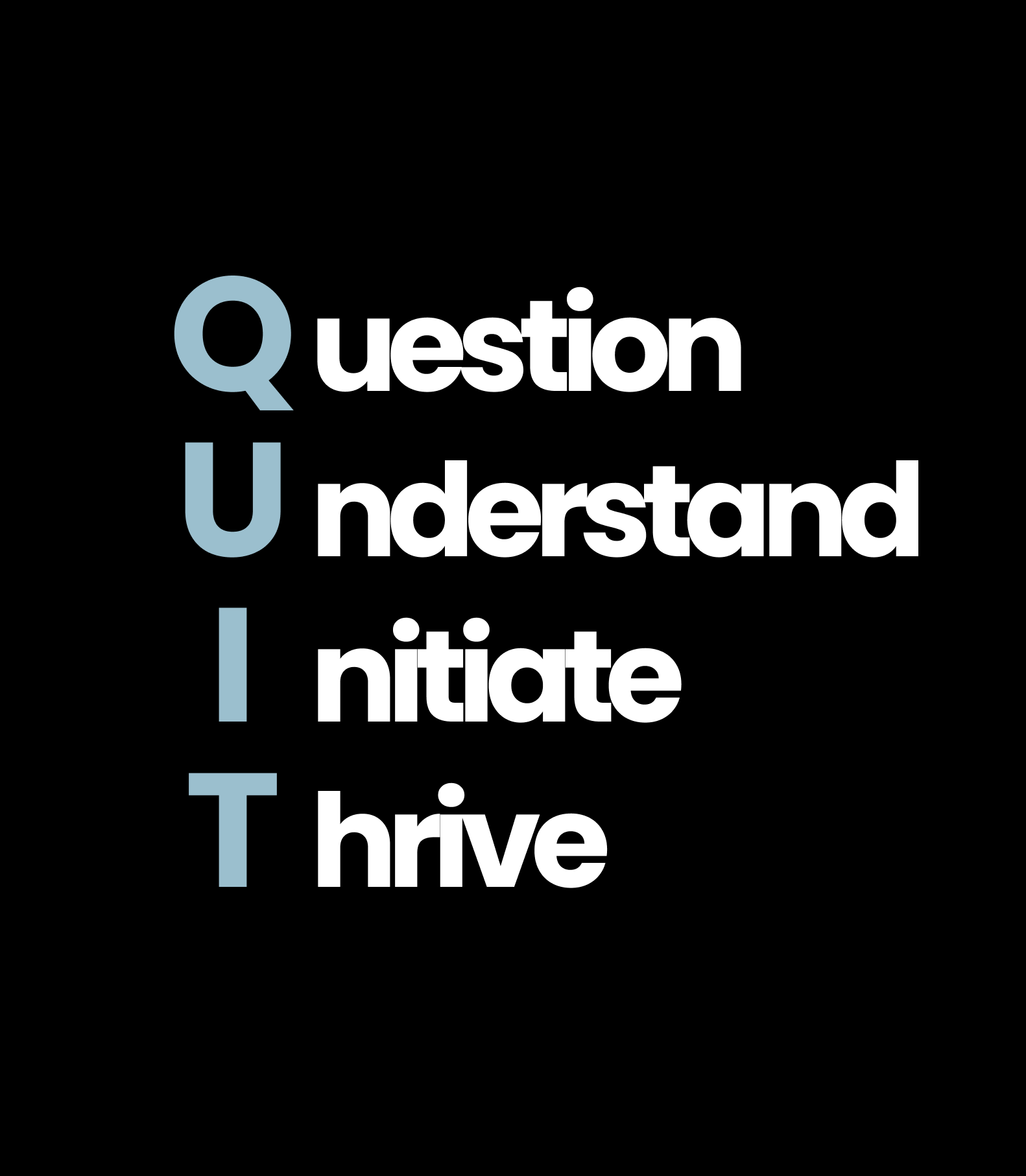
Q - Question
Question what isn’t working
Most of us are very good at adding. A new goal. A new project. A new habit. A new plan to fix the old plan. We’ve been taught that growth means more, so when something isn’t working, our instinct is usually to try harder. Sometimes, the answer is to stop. Start with the thing that keeps coming up. What feels heavier than it should? What takes far more energy than it gives back? What are you constantly trying to convince yourself is fine? What are you holding onto because you’ve already spent so much time building it? Don’t worry about whether you can quit it yet. Just be honest about what isn’t working. Most people already know. They just keep themselves busy enough not to sit with the answer.
What do you already know isn’t working?
U - Understand
Understand who you’re becoming
The person who started something and the person deciding whether to continue it are not always the same person. You change. Your life changes. What matters changes. Yet we keep making decisions for who we used to be. For a long time, I was the founder. My identity, my ambition and a lot of my self-worth were tied up in the business I had built. Then I became a mum. My time changed. My priorities changed. What I wanted from work changed. I was still ambitious. Very much so. I just didn’t want ambition to cost me the same things anymore. That was the harder thing to admit. Sometimes you’re not quitting because something is bad. You’re quitting because it no longer fits. So before you decide whether to stay or go, stop looking backwards at everything you’ve invested. Look forwards. Who are you becoming? What do you actually want now? Does the thing you’re holding onto belong in that life?
Are you making this decision for who you are now, or who you used to be?
I - Initiate
Initiate the quit
This is where thinking has to turn into doing. You can know something isn’t working for a very long time. You can talk about it. Make lists about it. Ask everyone you know what they think about it. Wait for a sign. Wait to feel ready. Wait for the perfect moment. At some point, you have to move. That doesn’t mean blowing up your life overnight. A good quit can be planned. Start by asking what staying is costing you. Your time? Your energy? Your confidence? Your opportunities? If nothing changes for another 12 months, where does this lead? Then work out what you’re replacing it with. If you quit the client, what fills the gap? If you quit the habit, what do you do instead? If you leave the job, what needs to be in place first? If you stop saying yes to everything, what gets the time back? Then commit to a move. Not one day. Not when things calm down. Something real. A conversation. A date. A boundary. A first step. You do not need to feel ready. Ready is a decision, not a feeling.
What is the first move you can make?
T - Thrive
Thrive because you made room
This is the bit we forget. The point of quitting isn’t the quit. It’s what the quit makes possible. When I left the business, I didn’t have every part of my next chapter mapped out. I made room. For consultancy. For mentoring. For investing. For speaking. For ideas I hadn’t had the time or headspace to take seriously before. For a version of work that fitted my life better. None of it appeared overnight. I could see it because there was finally space. That’s what a good quit does. It gives your time, energy and attention somewhere else to go. So don’t only ask yourself what you’re leaving. Ask what you’re making room for.
What could grow if you finally made room for it?
Q.U.I.T
Q — What do you already know isn’t working?
U — Are you making this decision for who you are now, or who you used to be?
I — What is the first move you can make?
T — What could grow if you finally made room for it?
You don’t need permission. You don’t need to have every answer. You don’t need to wait until the thing you’re holding onto becomes unbearable. Question what isn’t working. Understand who you’re becoming. Initiate the quit. Thrive because you made room.